
Body Image 360: Virtual vs In-Person Body Image Program
Choosing the right body image program starts with one practical question: should you meet with a therapist face-to-face or connect through a secure video platform from home?
Both formats can deliver the same quality of care, but the right choice depends on your location, your schedule, and how comfortable you feel opening up in each setting. This article breaks down what each format actually involves so you can decide with confidence, not guesswork.
Negative body image is closely linked to a higher risk of conditions like eating disorders and depression, according to the Office on Women's Health, which makes finding a body image program you will actually stick with a genuine health decision, not just a scheduling one.
Quick Comparison: Choosing the Right Body Image Program Format
A body image program works whether you choose virtual or in-person sessions, but a few practical factors separate the two paths. The table below breaks down the core differences so you can see where each format fits your situation.
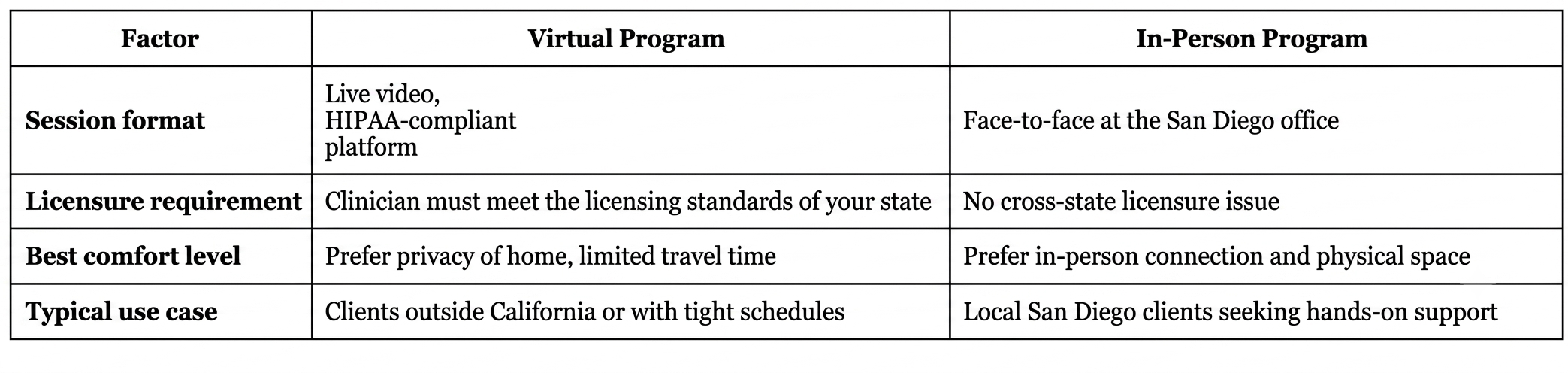
According to Telehealth.HHS.gov, providers must meet specific state requirements, including education, exams, and background checks, before they can practice across state lines.
This standard exists to protect clients, and it directly affects whether a virtual program is available to you depending on where you live.
What a Virtual Body Image Program Offers
A virtual body image program gives you access to licensed, structured support without leaving home, using a secure video platform built for confidential mental health care.
Sessions follow the same core process as in-person visits, including body awareness work, movement-based techniques, and guided self-reflection. The only difference is that everything happens through a secure video platform instead of an office.
1. How HIPAA-Compliant Teletherapy Sessions Work
Virtual sessions run through an encrypted, HIPAA-compliant platform, meaning your conversation stays private the same way it would in a locked office. Before your first session, you confirm your current location so your clinician can verify licensure coverage in your state.
From there, sessions follow a consistent rhythm: a check-in on recent progress, focused work on a specific phase of the recovery process, and a closing reflection to carry into your week.
According to Telehealth.HHS.gov, patients can now permanently receive telehealth services for behavioral and mental health care from home, reflecting how firmly virtual therapy has become part of standard mental health care.
2. Who a Virtual Program Fits Best
A virtual body image program tends to fit clients who live outside San Diego, juggle unpredictable work schedules, or simply feel more at ease processing sensitive topics from a familiar space.
If travel time or logistics have kept you from starting care, virtual sessions remove that barrier without lowering the quality of support you receive.
What an In-Person Body Image Program Offers
An in-person body image program takes place at Body Image 360's San Diego office, where movement therapy and visualization techniques benefit from physical space and direct interaction.
Sitting across from your therapist can make certain exercises, like guided movement or body awareness practices, feel more immediate and grounded.
1. What Happens During In-Person Sessions in San Diego
In-person sessions give your therapist room to guide movement-based exercises directly, using the physical office space for techniques that are harder to replicate on video.
You will still work through the same core framework, but the shared physical presence often deepens the sense of connection during vulnerable conversations.
2. Who Benefits Most From Face-to-Face Support
Clients who live near San Diego, or who simply feel more supported in a shared physical space, often gravitate toward in-person sessions.
In 2024, 52.1 percent of adults with a mental illness received treatment, and demand for structured, professional support continues to grow year over year, according to SAMHSA's 2024 National Survey, which reflects just how many people are weighing exactly this kind of format decision right now.
The Key Differences That Actually Matter in a Body Image Program
A body image program only works if you actually show up for it consistently, so the differences that matter most are the ones affecting your comfort and follow-through, not abstract ideas about which format is better.
1. Comfort and Privacy Trade-Offs
Some clients feel safer being physically present with their therapist, especially early in eating disorder recovery when trust takes time to build. Others feel more open discussing sensitive topics from the privacy of their own home, away from a waiting room or office setting.
Neither preference is wrong; it depends on what helps you speak honestly.
2. A Simple Self-Check for Choosing Your Format
Before deciding, ask yourself four questions. Do you live within a reasonable distance of San Diego? Does your weekly schedule allow for travel time to and from sessions? Do you feel more comfortable opening up in a private home setting or a dedicated office space?
How significant is your current level of need, since some clients start virtual and shift to in-person sessions as their care progresses? Answering these honestly points you toward the format that will actually get used, week after week.
Telehealth visits for mental and behavioral health reasons rose from 47 percent of all visits in 2020 to 58 percent in 2023, according to CIVHC's telehealth analysis, showing sustained comfort with virtual formats among patients nationwide.
According to the National Institute of Mental Health, early detection and structured treatment support better outcomes, and options range from individual psychotherapy to more intensive care for severe cases. Choosing a format you will actually stick with matters more than choosing the ideal one on paper.
Which Body Image Program Format Is Best for You?
A body image program works best when the format matches your real life, not an idealized version of it. Use these labels to find your fit:
Best for virtual: Clients outside San Diego, or those with limited scheduling flexibility, who want consistent, licensed support without travel time.
Best for in-person: San Diego-area clients who want face-to-face connection during movement-based sessions and prefer meeting in a dedicated office space.
Frequently Asked Questions About Choosing a Body Image Program
1. How do I know if virtual therapy is legally available in my state?
Providers must meet the licensing requirements, including education, exams, and background checks, of the state where they are located before offering virtual care there, according to Telehealth.HHS.gov. Your provider will confirm this with you before your first virtual appointment.
2. Is a virtual body image program as effective as in-person coaching?
Research comparing online and in-person therapy has found comparable effectiveness across common mental health concerns.
Lifetime prevalence data from the National Institute of Mental Health show eating and body image concerns affect a significant share of the population regardless of the treatment format chosen.
The right fit depends more on your personal comfort and consistency than on the format itself.
3. Can I switch between virtual and in-person sessions?
Many clients start with one format and adjust as their needs or circumstances change. Discuss format flexibility directly with your therapist during your discovery appointment.
4. What technology do I need for a virtual session?
You need a private space, a stable internet connection, and a device with a camera and microphone. Your therapist's platform will walk you through a quick setup check before your first session.
Start With a Free Discovery Appointment
Whether you prefer the convenience of virtual sessions or the connection of in-person care, the best next step is a brief conversation to determine which option is right for you.
Book your free 15-minute discovery appointment with Body Image 360 today, and take the first step toward a body image program built around how you actually live and heal.


