
Online Body Image Therapist vs. In-Person Body Image Counseling in San Diego: Which Is Better for You?
When you compare an online body image therapist with in-person body image counseling in San Diego, you are choosing between two legitimate ways to receive support. The better option depends on your privacy, schedule, comfort level, and the setting that helps you stay engaged enough to do the work.
You may already know you want help with body image, emotional eating, or self-criticism. The harder part is deciding which format will help you feel most comfortable and supported. This article walks you through both formats so you can choose the one that feels safe, practical, and sustainable.
Quick Comparison: Online Body Image Therapist vs In-Person Care in San Diego
An online body image therapist and an in-person counselor can both provide meaningful support when care is structured well. The biggest differences usually involve access, privacy, routine, and how you personally connect best during sessions.
The CDC states that recent national data show depression and anxiety are common among U.S. youth and adults and that access to effective treatment can increase well-being for people living with mental health conditions.
HHS also explains that telehealth is an accepted way to provide and receive health care services and that federal civil rights protections still apply when care is delivered remotely.
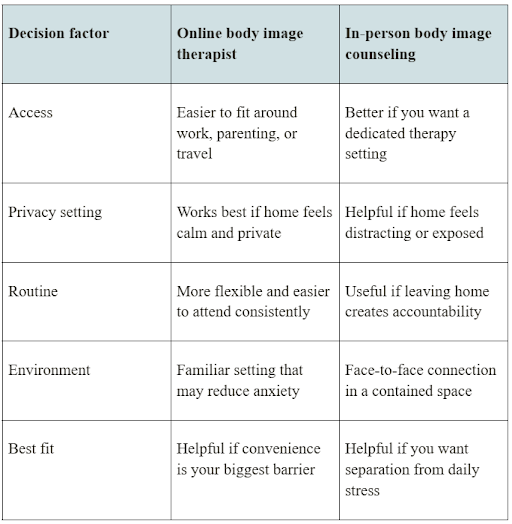
If getting to appointments is the main thing stopping you, online care may help you begin sooner. If your home does not feel private or emotionally steady, in-person support may give you a better starting point.
How an Online Body Image Therapist Works Day to Day
An online body image therapist offers structured sessions through a secure remote format instead of an office visit. The work still focuses on body image distress, emotional eating, self-worth, and the thought patterns that keep you stuck.
Session Structure and Technology for an Online Body Image Therapist
An online body image therapist should use a process that feels clear, confidential, and intentional. You should know how sessions happen, what technology is used, and what privacy steps protect your information.
HHS advises patients using telehealth to choose a private location, use strong passwords, lock their screens, and turn on encryption when possible because video apps and other telehealth technologies can create privacy and security risks if they are not handled carefully.
That guidance matters in body image work because these conversations often involve shame, eating habits, self-esteem, and personal history that you may not feel comfortable sharing in an exposed setting.
Body Image 360’s confirmed services include virtual coaching and online programs, along with body acceptance counseling, psychotherapy, and eating disorder recovery support. That service mix makes online support a natural option when privacy and consistency are in place.
That physical separation can matter if your home feels busy, tense, or unpredictable. Some people also find it easier to read tone, body language, and emotional presence when they are in the room with a therapist. If screens make you feel distant or distracted, an office setting may help you settle in more quickly.
This does not mean in-person care is always better. The best format is the one that helps you feel comfortable enough to stay engaged in the process.
When Eating Disorder or Health Risks Call for In-Person Care
An online body image therapist is not automatically the best first step if body image struggles are tied to severe eating disorder symptoms or physical health risk. In those cases, more structured support or in-person care may be more appropriate.
The National Institute of Mental Health explains that eating disorders are serious medical illnesses and that treatment may include psychotherapy, medical care and monitoring, nutrition counseling, and medication in some cases. NIMH Eating Disorders
That means the format should match the level of need, not just what feels easiest to schedule.
Online Body Image Therapist vs In-Person Standards and Safety
An online body image therapist should not feel like a lower-standard option. Remote care still carries obligations around privacy, accessibility, and meaningful access.
Rights, Accessibility, and Nondiscrimination in Telehealth
An online body image therapist must still respect your rights when care happens remotely. Federal protections do not disappear because a session happens over video or audio.
HHS states that telehealth providers must offer services in a nondiscriminatory manner and may need to provide communication aids, reasonable modifications, and language access services so patients with disabilities and limited English proficiency can meaningfully access care. HHS Guidance on Nondiscrimination in Telehealth.
That matters because good care is not just about convenience. It is also about access and fairness.
How Body Image 360 Supports Both Paths with an Online Body Image Therapist Option
At Body Image 360, an online body image therapist option and in-person counseling follow the same core philosophy. You were never broken, and healing starts with self-acceptance, body awareness, and emotional support rather than shame or rigid dieting.
If flexibility and home privacy are your biggest strengths, online support may fit well. If home feels stressful or exposed, in-person support may help you feel more contained and emotionally safe from the beginning.
What to Expect in Your First Session with Body Image 360
An online body image therapist or in-person provider at Body Image 360 starts by understanding your situation rather than pushing you into a fixed plan. Body Image 360 offers a free consultation and a 15-minute discovery appointment with Susan K. Ward, LCSW.
That first step can help you clarify what kind of support you need. You may be dealing with emotional eating, chronic body dissatisfaction, low self-esteem, or recovery from disordered eating. A useful first conversation should help you decide whether online or in-person care feels like the more supportive starting point for your life right now.
Key Differences That Matter When Choosing an Online Body Image Therapist or In-Person Counseling
An online body image therapist and in-person counseling each solve a different problem. Online care often removes practical barriers, while in-person care often creates stronger physical separation from stress.
1. Convenience and Access
An online therapist can make attendance easier. You do not need to factor in traffic, parking, or travel time, and that can make it easier to stick with support when life feels full.
If you keep postponing care because getting there feels hard, online sessions may be the change that helps you begin. Convenience does not guarantee progress, but it can remove the barrier that prevents you from getting started.
2. Emotional Privacy and Focus
An online therapist works best when your home gives you enough quiet and privacy to talk openly. If you live with family, roommates, or anyone who makes you feel watched or interrupted, the office may work better.
This is why there is no universal answer. The best option is the one that makes you feel safer, more focused, and more likely to stay in the process.
3. Which Option Is Best for You Right Now?
An online body image therapist is often the better fit if you need flexibility, have a private place to talk, or want support that is easier to maintain around your daily routine. In-person counseling is often the better fit if you want face-to-face connection, need separation from home stress, or benefit from the structure of going to an office.
If you are unsure, Body Image 360 offers a free consultation and discovery appointment so you can talk through your needs before choosing a format.
Frequently Asked Questions
Q1. Is an online body image therapist as effective as in-person counseling?
An online body image therapist can be effective when the provider is qualified, the format fits your needs, and the sessions are structured well. Federal agencies treat telehealth as a serious part of health care delivery, not as an informal substitute.
Q2. When should I choose in-person counseling instead of an online body image therapist?
An online body image therapist may not be the best first step if you have severe eating disorder symptoms, physical health risks, or no truly private place to talk. NIMH explains that eating disorders are serious medical illnesses and may require medical monitoring along with therapy and nutrition support. NIMH Eating Disorders
Q3. What should I look for in a licensed online body image therapist?
An online body image therapist should have the right clinical license, use secure technology, explain privacy clearly, and help you understand your options. HHS guidance also makes clear that telehealth services should be accessible and nondiscriminatory.
Q4. Can I start online and switch to in-person later?
An online body image therapist can be a practical starting point if access or anxiety is your biggest barrier. As your needs change, you may decide that in-person care gives you more structure, or you may stay online because it helps you stay consistent.
Conclusion
Choosing between an online body image therapist and in-person body image counseling in San Diego is not about forcing one answer onto every person. It is about finding the format that helps you feel safe enough to be honest, supported enough to stay engaged, and comfortable enough to begin.
If you are ready to improve your relationship with your body, Body Image 360 offers a free consultation and discovery appointment so you can decide which format is the right first step for you.


